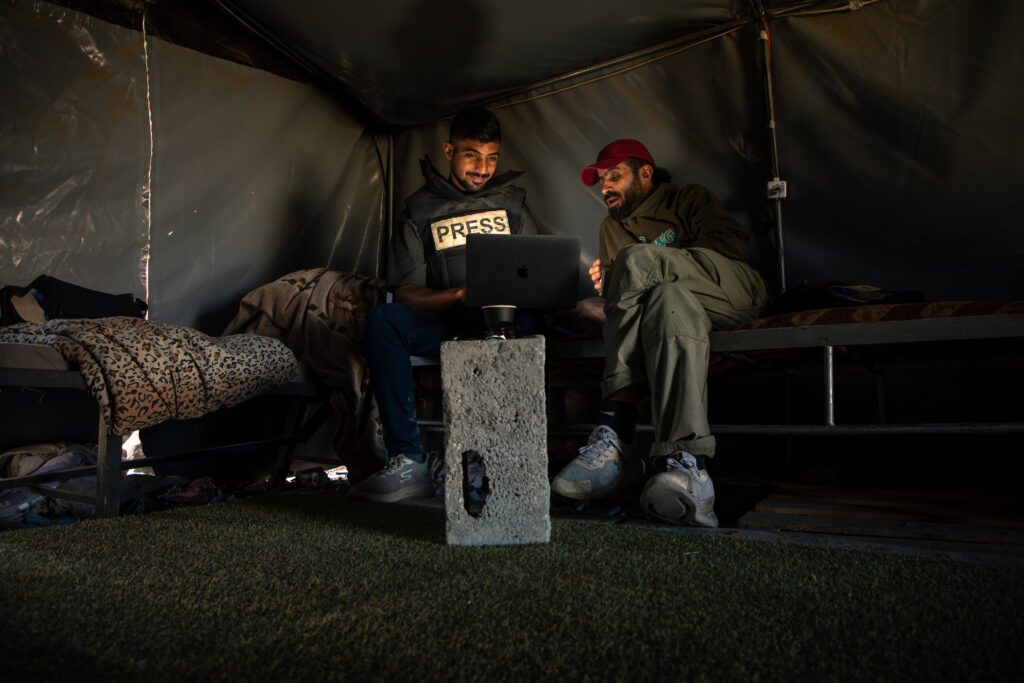
Story of the Witness Gaza Project
The Witness Gaza Project provided direct financial support to Palestinian photojournalists, as Israel’s deadly assault on journalists and total blockade on foreign journalism in Gaza led to the killing of 240 Palestinian journalists and a complete lack of foreign coverage.
The project, in solidarity with the Palestinian struggle for self-determination, emerged from a disturbing sense of impotence in the face of genocide. Our goal was to connect with journalists working in Gaza to capture the realities of the ongoing genocide, to amplify their voices and images, and to stand in solidarity with our Palestinian brothers and sisters. The cash support was to ensure their safety and survival as they risked their lives to document the systematic destruction of Gaza between August and October 2025.
In total, the project received support from 64 individuals, friends, and colleagues concerned with the Palestinian right to life and in support of journalists under attack by the Israeli military to silence the press. In exchange for much-needed direct cash support, three photojournalists, a videographer, and a photographer collaborated to provide us with images and a short video documenting their lives and work in Gaza.
Moath Emad Miqdad
On 25 August 2025, the IDF bombed the Nassar Hospital in Khan Yunis, killing 22 people, including 5 journalists. The attacks targeted the hospital’s fourth floor, where journalists were gathered that day. Moath Emad Miqdad, a Palestinian photojournalist, was arriving at the hospital when the attacks began. Much of the footage from the following video was captured on his cell phone. He later narrated his story for the video. With Moath’s footage and the support of Palestinian video editor Dahman Eyad, Mohammed Alatar was able to produce the following video capturing the deadly attacks on journalists that day.
Witness Gaza Project Updates
August 27th, 2025
Dear Friends,
After the August 25th attack on Nasser Hospital, which resulted in the killing of twenty people, including four journalists and one cameraman, The Witness Gaza Project identified and made contact with a journalist who witnessed the attack. We are now supporting three journalists who have received our first payments from your donations. They are now located in Gaza City, which, I am sure you have heard, is the target of heavy bombing in preparation for Israeli occupation.
It has not been easy to communicate with these journalists. We will do our best to keep you informed, but please be assured that your donations have reached three journalists, and we hope this will help them continue to tell the story of Gaza.
According to the Gaza Ministry of Health, approximately 63,746 Gazans, including 18,400 children, have been killed since October 7, 2023. Furthermore, an estimated 278 journalists and media workers have been killed, as reported by Reporters Without Borders.
It is difficult to convey the profound sadness and righteous anger we feel as we witness day after day the killing of innocent Palestinians. The impunity of Israel in the face of International Law, the unchecked power of the US administration to use American tax dollars to supply more and more weapons to Israel, and the violent rhetoric and dehumanizing language are unacceptable.
I want to share a quote from Michel Sabbah from the film “The People’s Patriarch” by Mohammed Alatar and Dr Lily Habash. “We are left with two options: either swallow the poison forced upon us and accept to survive without a state, or hold on to our resistance and maintain our determination that we are people deserving of a state.”
Israel is pushing Gazans into Egypt and West Bank Palestinians into Jordan, in preparation for the expansion of illegal settlements and a complete redefinition of the region. While our eyes are largely on Gaza, many people are unaware of Israel’s move to occupy the West Bank, with Ramallah as Palestine’s de facto capital, already seeing increased movement of Israeli Police.
Palestinians in the West Bank who neighbor the illegal Israeli settlements are facing escalating violence. Zionists deny their right to exist, and the violence has left families terrified to leave their homes, go to work, school, or tend their fields. The dehumanization of Palestinians, or any person, anywhere, is terrifying and should be a lesson to us all. History repeats itself; this capacity to dehumanize is in all of us, and it will only be through nonviolence that we find peace.
I will leave you with another quote from the Former Latin Patriarch, Michel Sabbah,
“I exist today, therefore I will exist tomorrow.”
With love,
Rebecca Day Cutter
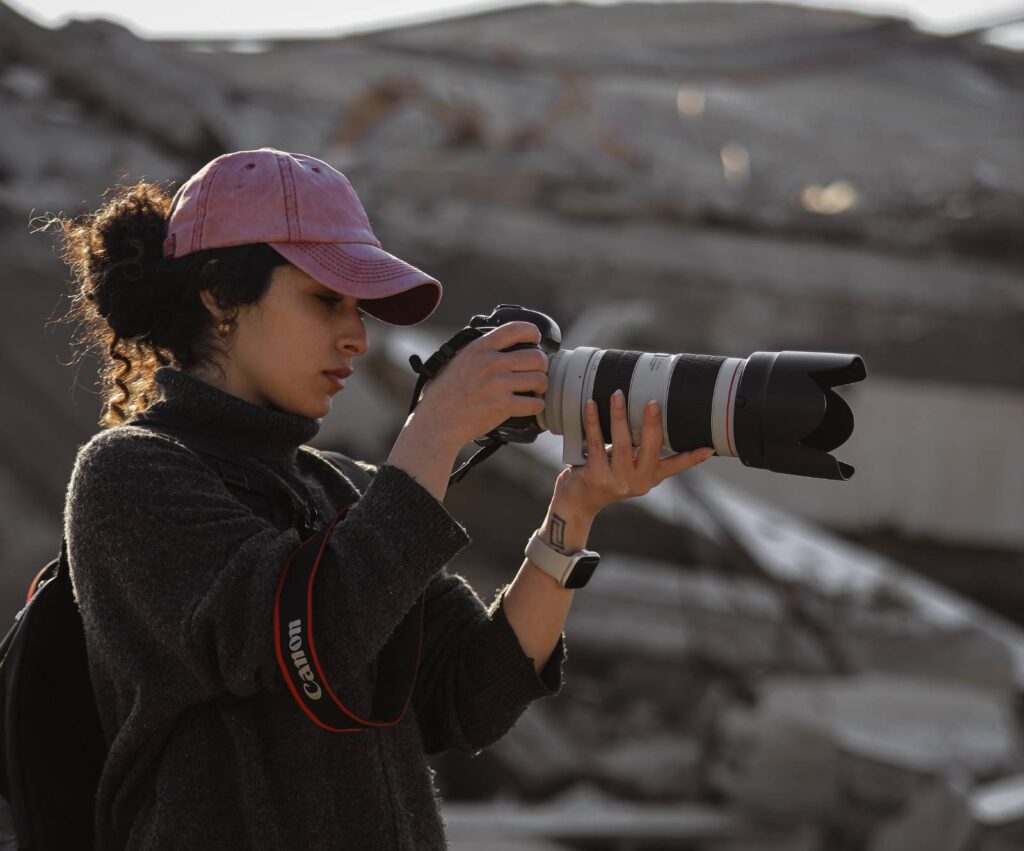
Fatena Mhanna is a photographer from Gaza known for her powerful work documenting the everyday lives of people amidst the ongoing conflict. Her focus is on sharing the human stories of those living there with the world, offering a vital perspective on resilience and the reality of war.
Her photography aims to shift the focus from mere statistics to the personal experiences, struggles, and moments of perseverance of the Gazan people.
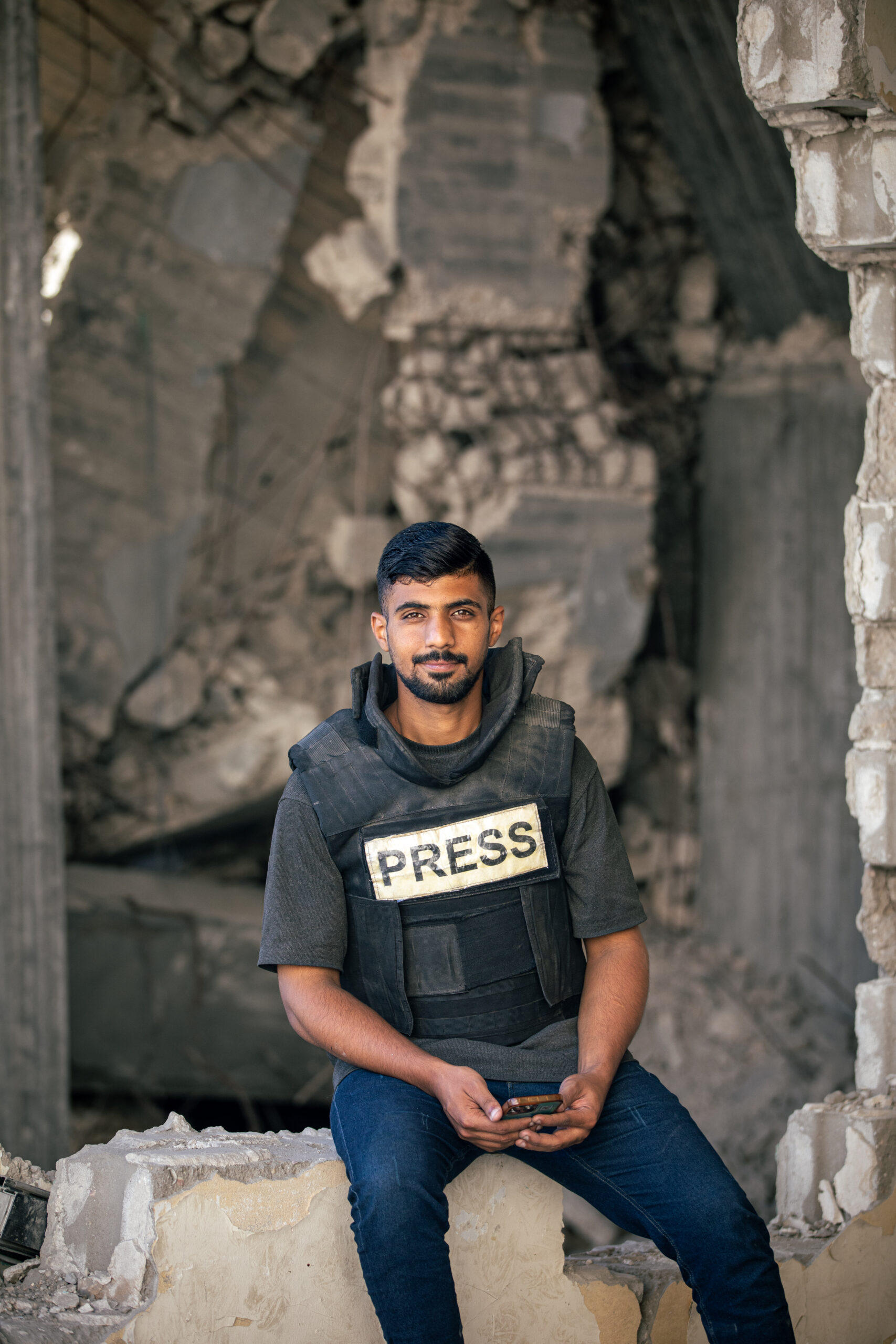
Fatena collaborated with the Witness Gaza Project with portrait interviews of Palestinian jounralists, Ibrahim Qannan, and Najed Hajaj.
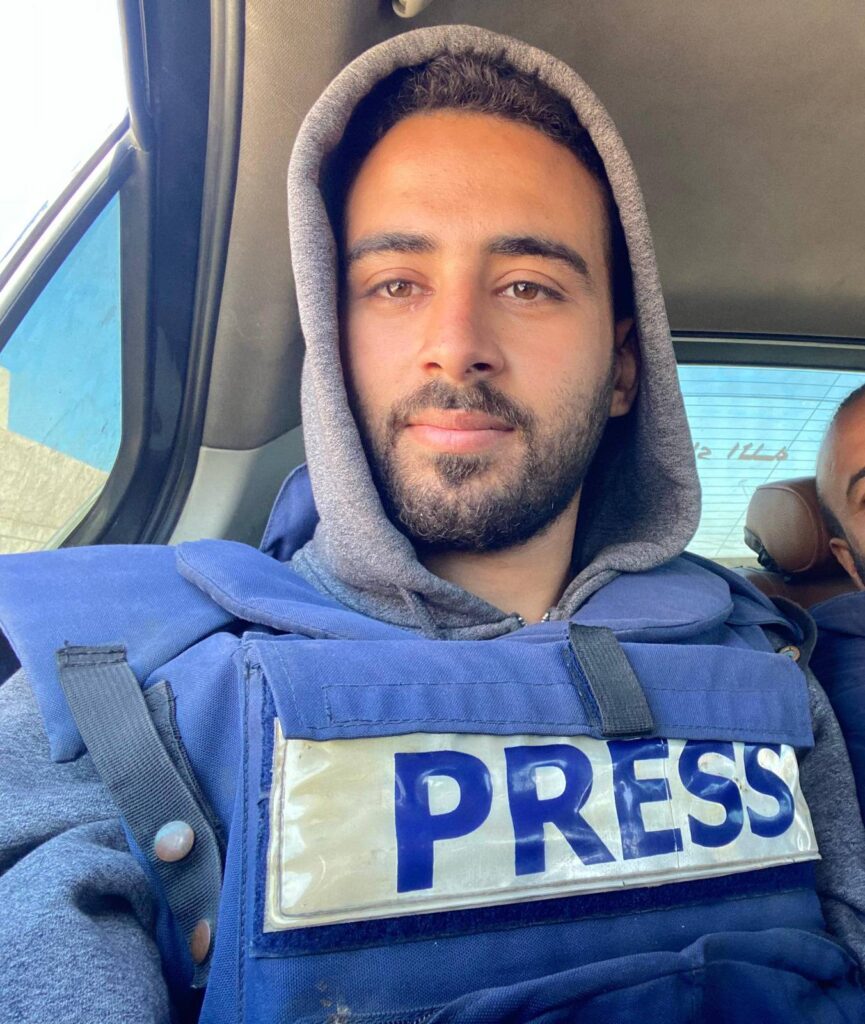
Dahman Eyad is a Palestinian videographer and editor from Gaza, known for his relentless work in documenting the conflict there. His work is a crucial part of the effort to visually record the human experience and devastation in the Gaza Strip. He worked with Mohammed Alatar as video editior for the above video.
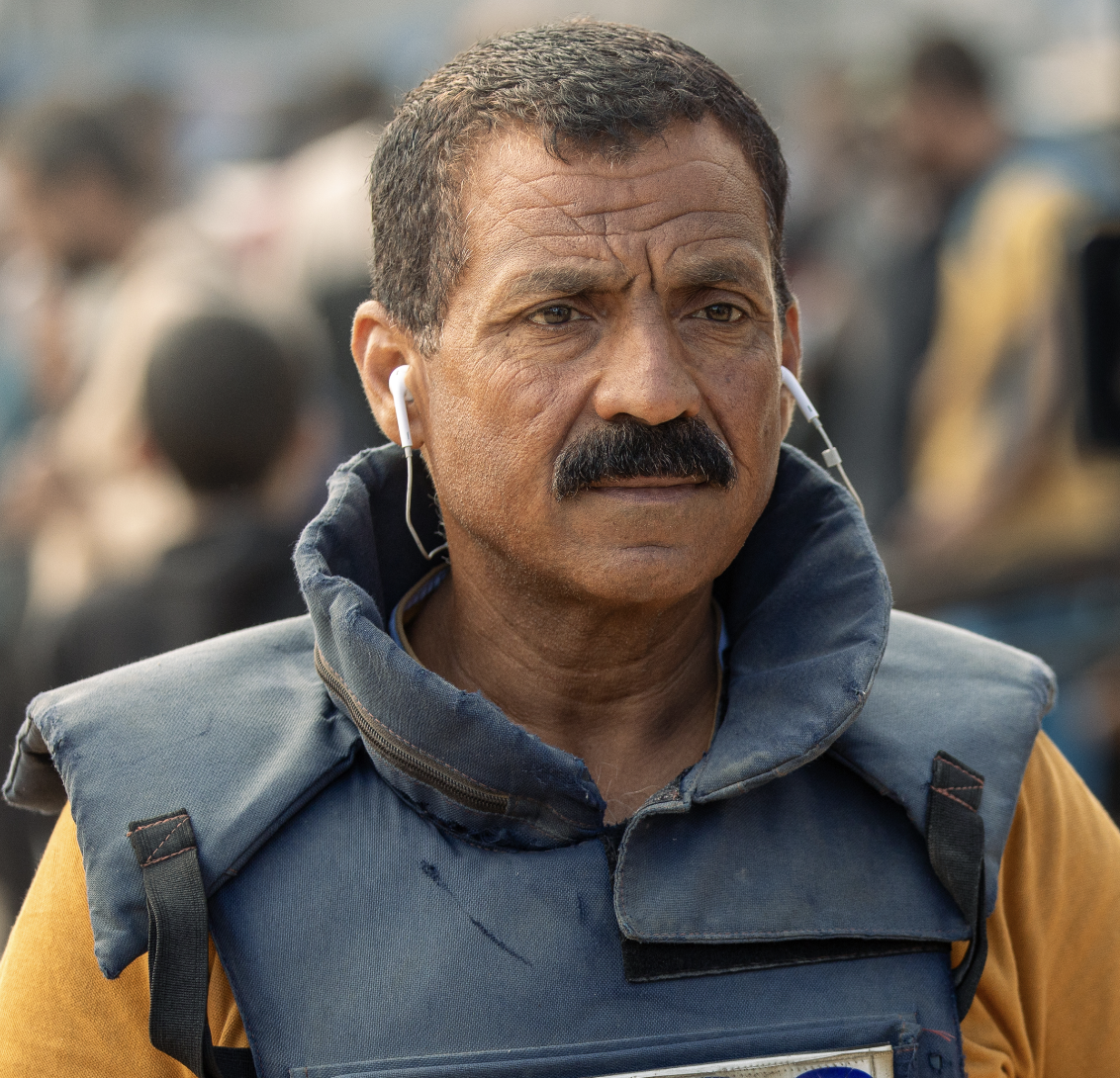
Reflections from Mohammed Alatar
on the Witness Gaza Project collaboration
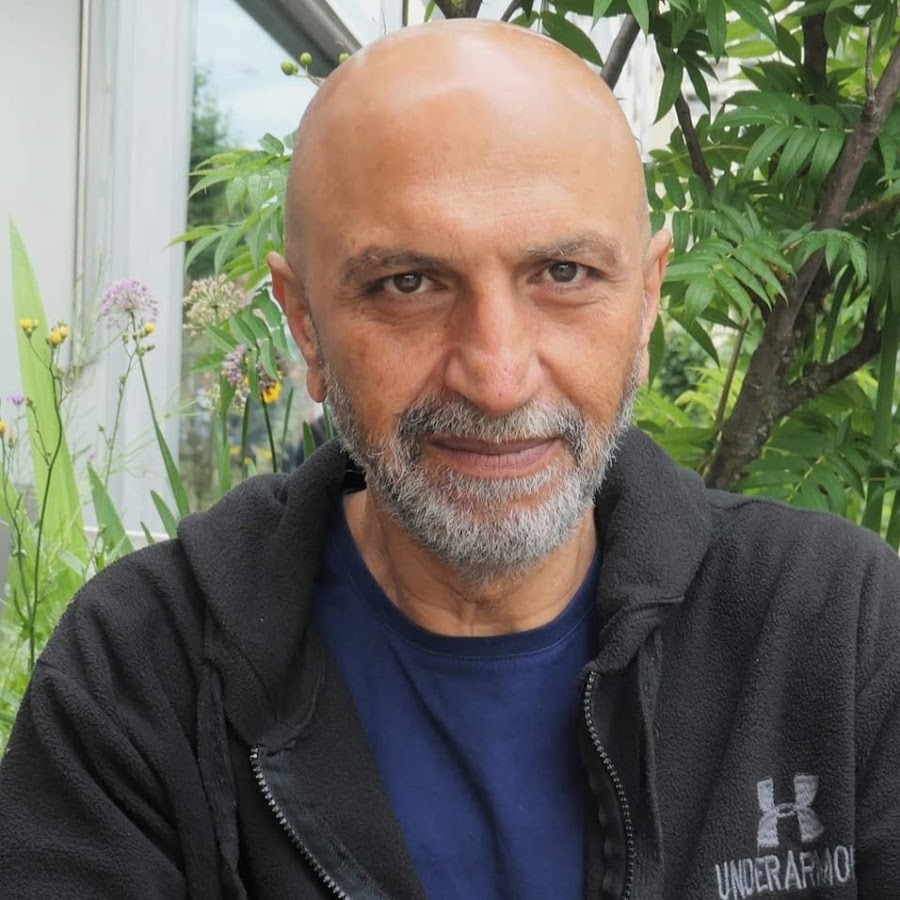
“When I started working on the ‘Witness Gaza’ project, I genuinely thought it would be a minor endeavor—something that would take a few days to complete. Instead, two months later, as we approach the end, I would like to share some of the complications we encountered. Perhaps this will give you a clearer idea of what is happening on the ground here, in both Gaza and the West Bank.
The initial focus of the project was to highlight the plight of Palestinian journalists in Gaza and investigate why so many have been killed in this current conflict—a toll exceeding that of any other war in modern or ancient history. The idea was to find photographers and videographers in Gaza who could help us gather footage that documents the struggles facing Palestinian journalists there.
I began searching for professionals in Gaza, many of whom I know personally. The major obstacle, however, was reaching them. Most of the time, Gaza has no internet or phone service. When connections were available, they were weak and primarily used by people to check on their families and loved ones. Communicating with the journalists was an incredibly difficult and persistent problem.
While waiting to secure a photographer, a major incident occurred: Israel bombed the roof of a hospital in Gaza, killing five journalists. I searched for a journalist who was there and witnessed the event, and I found one. He had filmed an incredible, dramatic account on his phone, having witnessed the entire incident. I managed to reach him, and he agreed to send me the footage so we could produce a short clip.
The new problem was how to get the footage out of Gaza. The internet was practically nonexistent, and even if it briefly appeared, it was so weak that uploading a 1 GB video would take an eternity. After a week of tireless efforts, we finally managed to download the videos and create a clip highlighting the incident where the five journalists were killed.
Once the footage was secured, I needed the voice-over from the journalist who filmed it, so he could recount what truly happened and what he witnessed. Finding a quiet place in Gaza to record a voice-over proved to be virtually impossible. Between the constant shooting, the bombing, the screaming, and the general chaos of Gaza, it was nearly hopeless.
After another week of trying, we finally succeeded in recording him. He sent me a voice message via WhatsApp, as most professional equipment in Gaza had been destroyed and there was no clean recorder available. When I received the audio, the quality was not suitable for a professional video, forcing us to hire an external company to clean and process the voice track.
The editing of the video was supposed to take place here in the West Bank. I reside in Ramallah, and my editor lives in Nablus. There are three major checkpoints between Ramallah and Nablus; the West Bank is cut into pieces by checkpoints, and violent armed settlers are spread across the territory. Traveling the road is extremely dangerous. The distance between Ramallah and Nablus usually takes about 30 to 40 minutes, but now, it can take half a day to travel, and that’s if you are lucky enough to pass the checkpoints and reach your destination.
I initially tried to bring my editor from Nablus. We managed to work for a short period, but he had to return immediately because Nablus was facing an imminent invasion, and he needed to be with his family.
How, then, could I get the editor back to Ramallah? I finally agreed that he should come and stay with me until the project was finished. We managed to get him out of Nablus; he came to stay for five days, and we worked day and night to complete the editing. The project that was supposed to take a few days ended up taking two months, consuming immense amounts of energy, time, and pain. I am reminded of a quote by Rosa Luxemburg: “Those who do not move do not notice their chains.” In Palestine, when you start moving and working, you immediately grasp the layered “matrix of control” imposed on the Palestinian people. Everything here is a struggle; everything is difficult, and everything is man-made and designed to be so.
I want to thank you from the bottom of my heart for being part of this project, especially for coming from America. Most Palestinians truly believe that the only thing standing between them and their freedom is the American administration and its blind support for Israel. It warms my heart to let them know that this project was supported by many ordinary Americans who have a big heart and are willing to help and show solidarity.
The Palestinian people are in need of so many things right now, but what is most profoundly needed is hope—the hope to survive, to keep going, and to dream of tomorrow. Your active kindness provides hope for the hopeless.
Thank you very much for your service, your kindness, your generosity, and most of all, for being a human who feels the pain of your fellow human beings. Thank you.”
– Mohammed Alatar
Film by Moath Emad Miqdad, produced by Mohammed Alatar
Progress Without Wisdom…
A Civilization Without a Soul
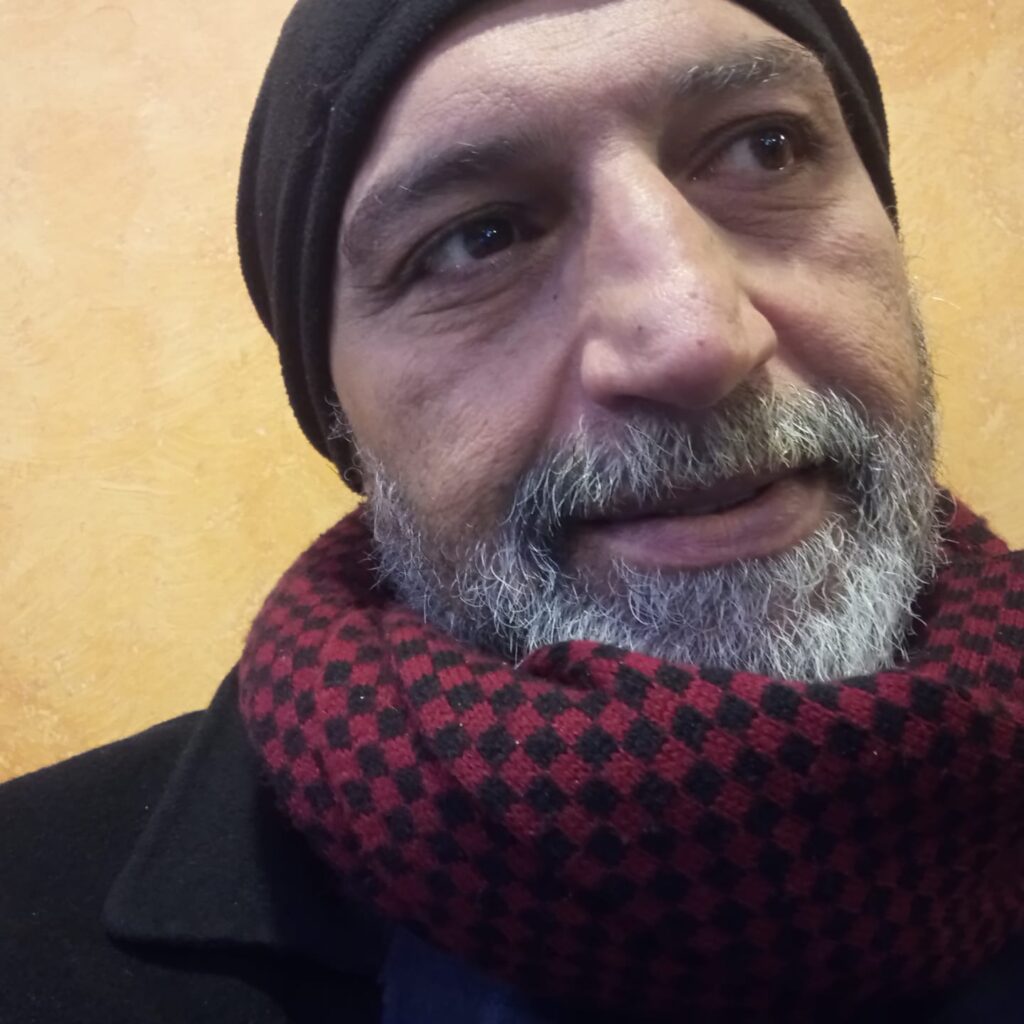
By Mohammed Alatar
Progress without wisdom is like a body without a soul—moving, alive, yet devoid of meaning.
In an age where technology accelerates and achievements pile up, we rarely stop to ask the most important question: Where are we headed?
We have become contemporaries of everything… except our own souls. The world advances in every field—except in wisdom.
What is the value of motion without direction? What is the meaning of life without a spirit to guide it?
Wisdom is not the ornament of progress—it is its essence. Without it, all we live becomes mere noise without purpose.
The world today does not lack speed—it lacks a compass.
We build, invent, explore space, and program artificial intelligence… yet we remain unable to tame our anger, to understand pain, to stop killing, to recognize the humanity of the other.
The more material progress we make, the more the values that give us our humanity recede.
And so we arrive at a terrifying paradox: we possess all the means to live, yet lack the meaning that makes life worth living.
We do not need more progress.
We need wisdom—to restore to this progress a heart, a conscience, a purpose.For the body alone does not make a human, just as progress alone does not make a civilization.
It is the soul that matures, refines, and teaches us how to walk—not just forward, but toward the better.
But this is not mere philosophical lament. The body that moves without a soul, the compass that has been lost, have today found a stage upon which their tragedy is laid bare… a stage called Gaza.
There, words stop and things themselves begin to speak.
There, progress is not measured by the height of our buildings, but by the depth of the craters left by our “smart” bombs.
There, “artificial intelligence” becomes moral stupidity when it draws targets on the bodies of children, and “means of communication” turn into tools for broadcasting death live.
Progress without wisdom does not see human beings in Gaza—it sees a “security problem.”
It does not hear the cries of mothers—it hears “background noise.”
It looks at homes buried over their inhabitants and calls them “collateral damage.”
It counts the souls lost as “numbers in a report.”This progress has given us the ability to destroy an entire neighborhood with the press of a button—yet stripped us of the ability to feel even the prick of a conscience.
Gaza is not only a political or military failure—it is a civilizational bankruptcy.
It is proof that we have reached the summit of technology only to fall into the deepest moral abyss.
And here Gaza stands today—it does not ask us about our satellites or the speed of our internet.
It does not want our planes or our tanks.It stands amid the rubble of the “developed world” and hurls in our faces the only question that matters—the question of wisdom:
“Where is your humanity?”If we cannot answer that, then everything we have built, and everything we will build, will remain nothing more than a lavish monument…
on the grave of a civilization that has lost its soul.
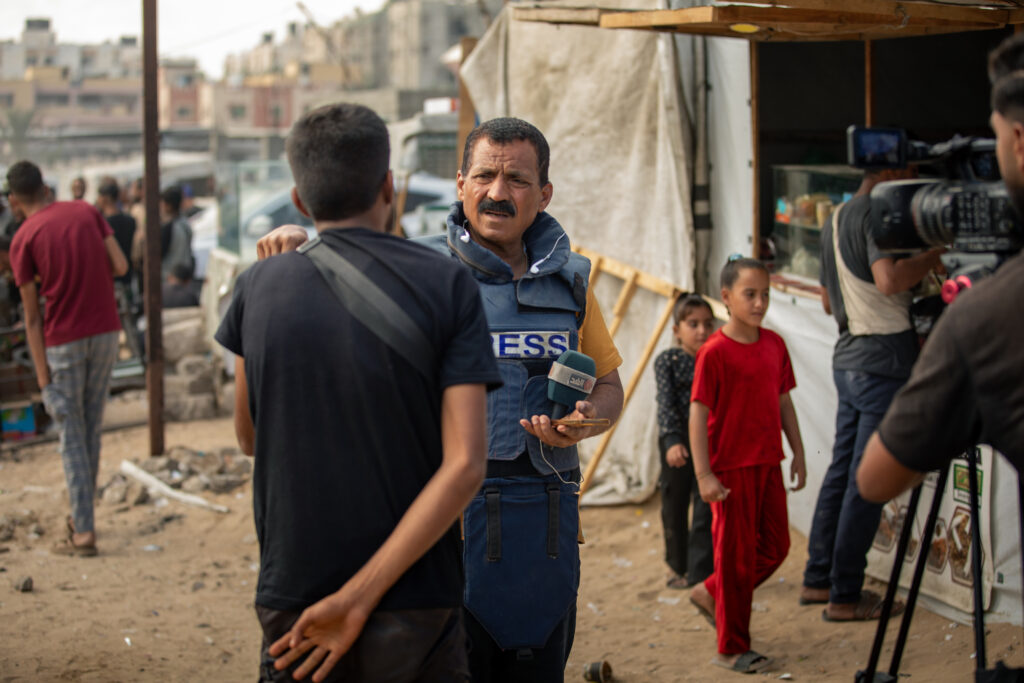
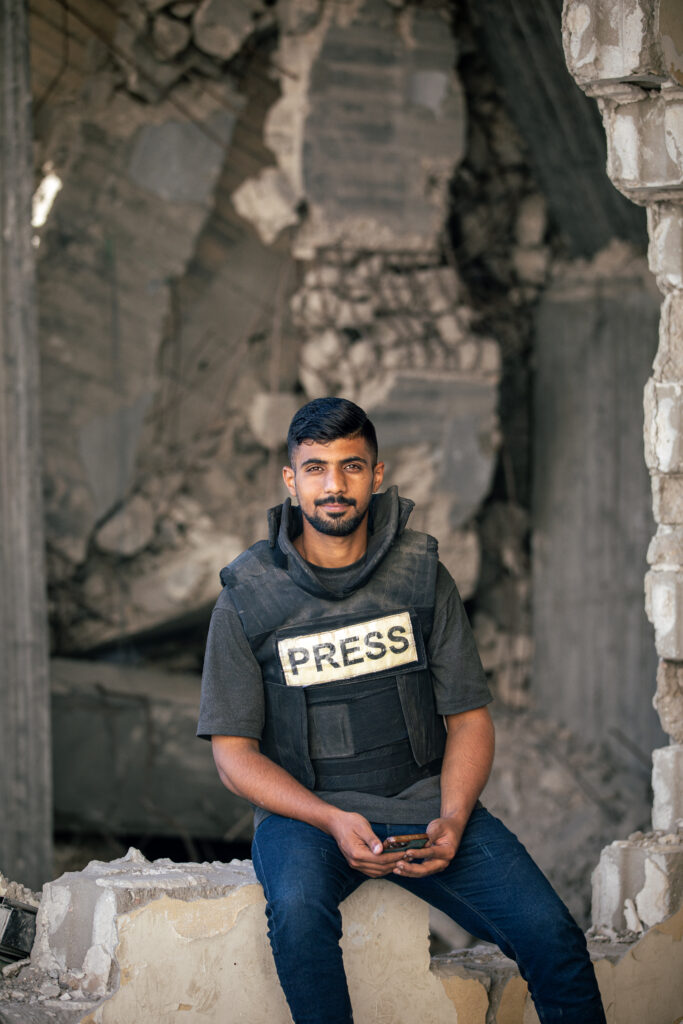
Who is Ibrahim Qannan?
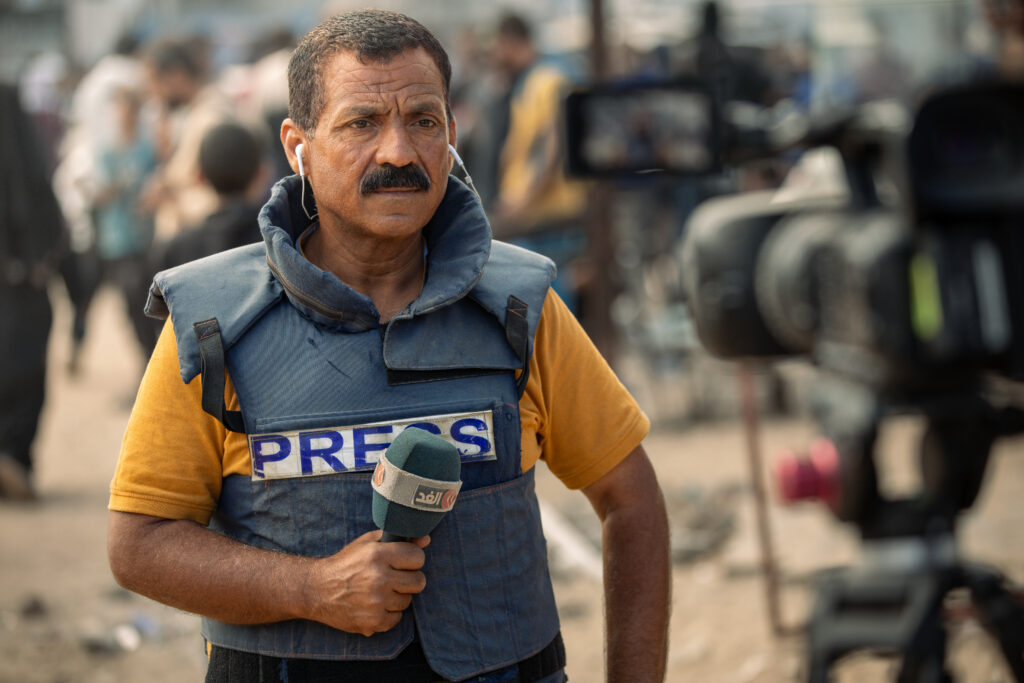
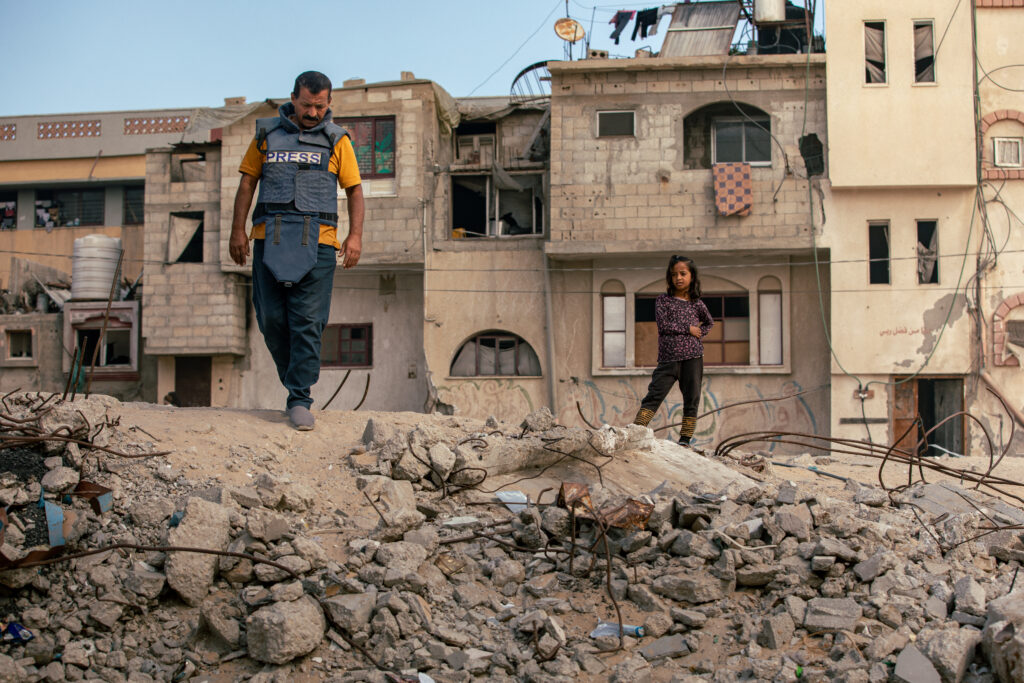
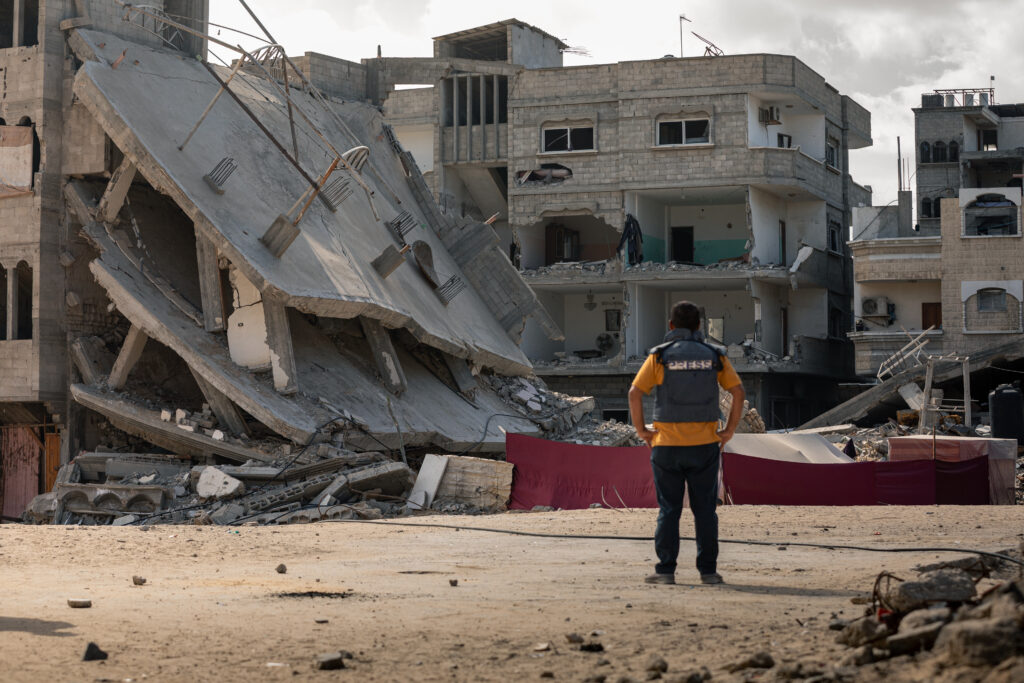
In the chaos of Gaza’s skies, Ibrahim Qannan stands before the camera, not as a distant observer, but as a witness living every headline he delivers. At 52, the correspondent for Al-Ghad TV has spent nearly three decades reporting from the heart of one of the world’s most volatile regions.
“I’ve been a journalist for around 30 years,” he says. “I’ve covered every political and economic event, every conflict and war in Gaza.” His voice carries the weight of years lived under siege, a voice shaped by smoke, dust, and relentless truth.”
“Since October 7, 2023, journalism in Gaza has turned into a dangerous mission of survival,” Ibrahim says. “We’ve faced unimaginable challenges, personal targeting, bombings, and destruction of media offices, equipment, and broadcast vehicles.”
Over 254 journalists have been killed, he recounts, many of them while trying to transmit their final report. “They posed no threat to the occupation forces. Their only crime was being Palestinian and journalists.”
With power, internet, and communication cut off, reporters risked their lives just to send a single clip. “Many died while trying to catch a signal or find electricity,” he adds. “We lived through days where sleep, rest, even food became impossible. We kept moving, from city to city, camp to camp, under fire.”
When Israel barred nearly 4,800 international journalists from entering Gaza, the local reporters became the last eyes of the world. “We found ourselves face-to-face with tanks,” he says. “No journalist anywhere could endure what we did, yet we carried on to deliver the truth.”
What was the hardest moment?
“This is the hardest question for me,” Ibrahim admits quietly. “We lived through so many unbearable moments that I’ve lost count.”
His first shock came on the war’s first day. “I was the first Palestinian journalist injured inside Nasser Medical Complex,” he recalls. “An ambulance was targeted just as I was about to go live. I was hit by 13 pieces of shrapnel, waited four hours for treatment in a hospital filled with wounded and martyrs, and then I went back on air, my body torn apart.”
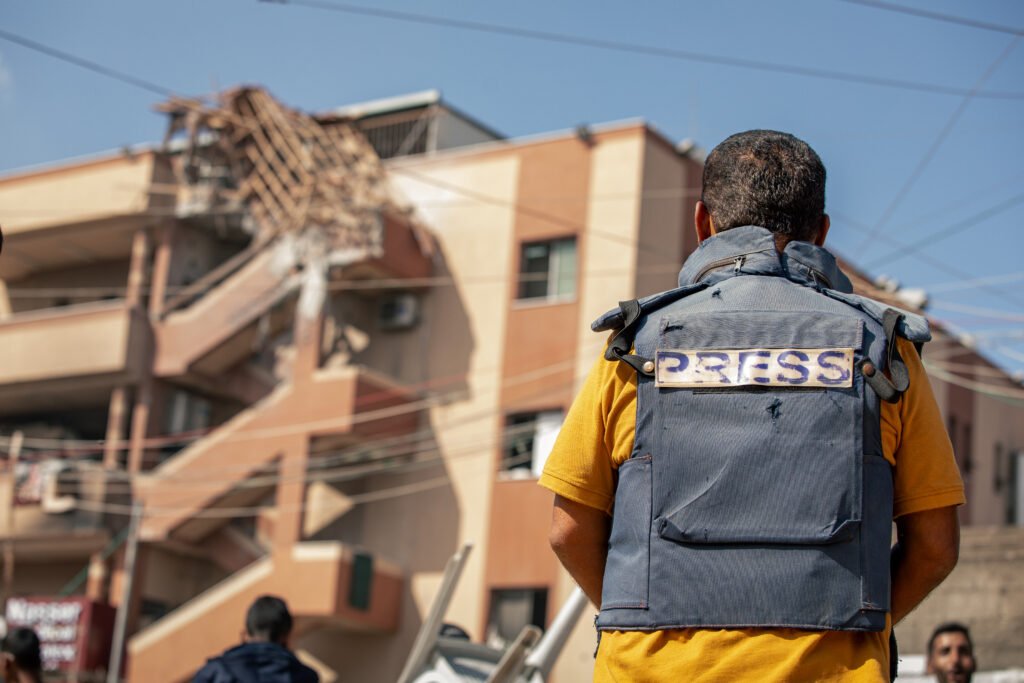
But the deepest wound came months later, on August 25, 2025. “I watched five of my colleagues die in front of me, live on air,” he says. “They were filming for Reuters when the hospital was hit by two shells. They died as I looked at them, and I could do nothing. They were killed in cold blood. Their only fault was telling the truth.”
Why do you keep going?
“The Palestinian journalist carries a human and moral mission,” Ibrahim says with conviction. “Journalism is not just a job, it’s a vow we took to be loyal to the truth, to the image, to people’s suffering.”
Despite exhaustion, injury, and grief, he refuses to step back. “Even if this war lasts ten more years, we will keep reporting. We are the voice of the voiceless, and we will never abandon that duty.”
Through the chaos, Ibrahim found a rare kind of bond, one that grounded him in humanity. “The only thing I gained during this war was people’s love,” he says. “I was with them in the tents, the hospitals, the streets, the schools. I became their voice, and they felt my sincerity.”
He smiles faintly, remembering a rare moment of relief. “During the first truce, people lifted me on their shoulders. That was my greatest reward, to feel that my voice truly reached them.”
What is the state of journalism in Gaza?
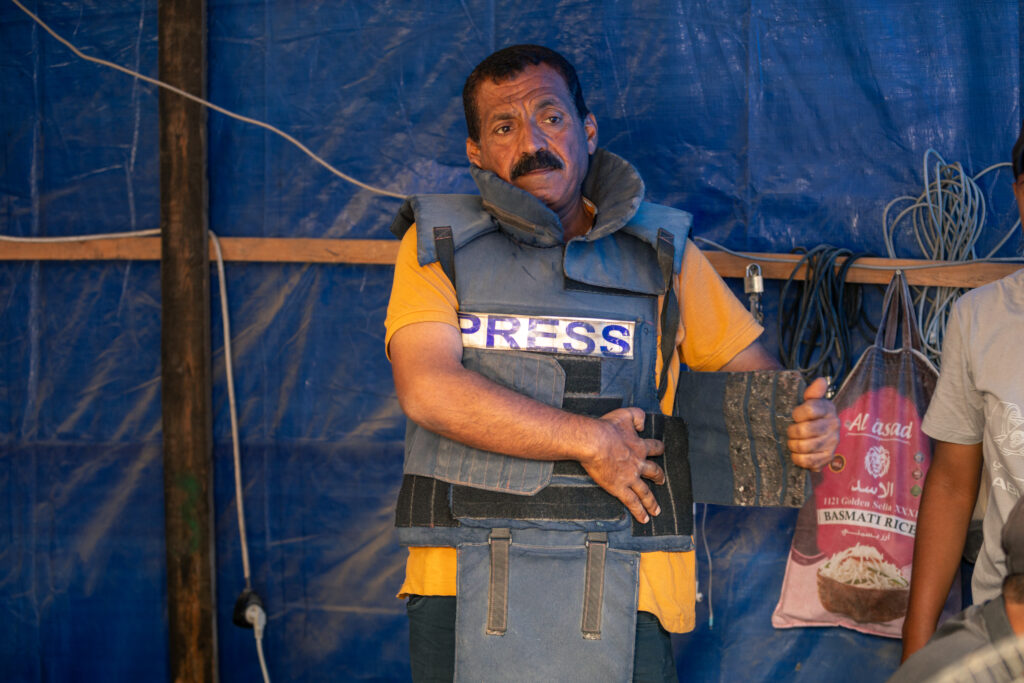
“I’ve covered Gaza since the days of Clinton’s visit, through every war,” he says. “But nothing compares to this one. Death from the first moment, no safety, no communication, no respect for the press. It’s a crime against journalism itself.”
He pauses, his tone firm. “Israel knows that the word is stronger than its weapons. That’s why they wanted to silence the camera.”
Yet the journalists of Gaza refused to be erased. “We created internet out of thin air,” Ibrahim says. “With words, we faced missiles. With images, we faced tanks. With pens we faced armored vehicles.”
What does Gaza mean to you?
“Gaza has survived every attempt to destroy it,” Ibrahim says, his eyes steady. “Its people have watered the soil with their blood and the blood of their ancestors. We are the heirs of this land, the olive trees, the vineyards, the story itself.”
To him, Gaza is not just a place on a map; it is an eternal symbol. “Gaza is the living image of the Palestinian cause, the heart of our identity. And like the phoenix, it will rise again from the ashes and rubble.”
He looks into the distance, his voice unwavering. “Gaza is home, and it will always overcome its occupiers.”
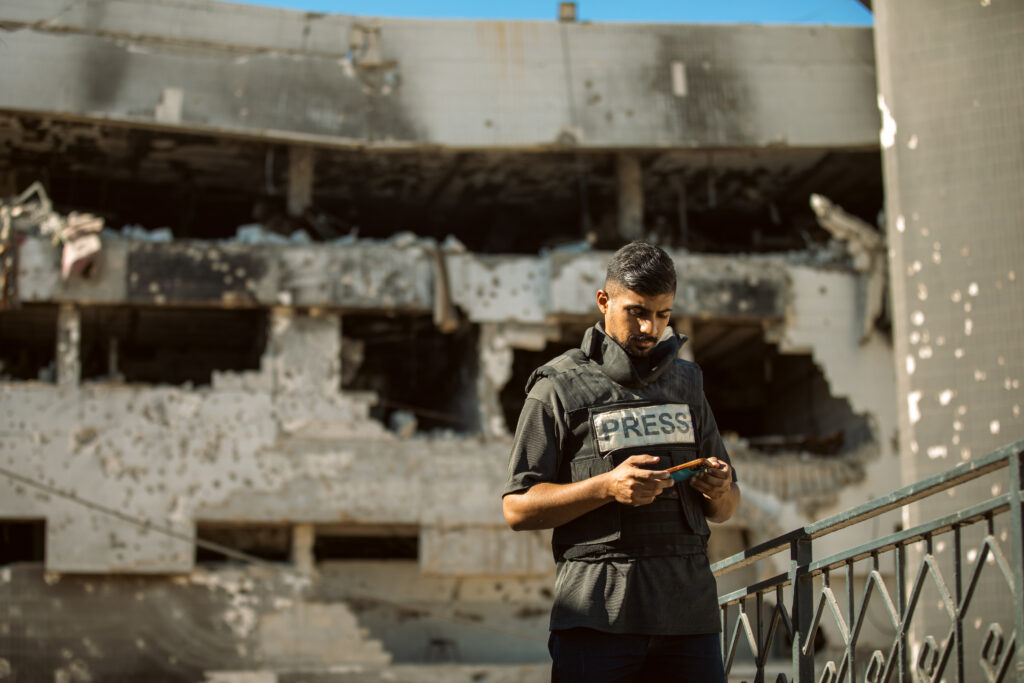
Who is Nahed Hajaj?
At only 26, Nahed Hajaj has already spent years behind the camera, documenting the most painful chapters of Gaza’s story. A freelance photojournalist working with several international agencies, Nahed’s work captures both devastation and defiance, the quiet strength of people who refuse to disappear.
“I’m a freelance photographer working with different international outlets,” he says. “Photography has always been my passion, my way of telling Gaza’s story.”
What was a moment that changed everything?
“There have been many painful moments,” Nahed begins, his tone steady but heavy. “But the one that broke me was the day the Israeli army targeted the journalists’ tent at the gate of Al-Shifa Hospital.”
He pauses. “My closest friend, the journalist Mohammed Al-Khaldi, was killed that day. Six journalists were martyred in that single strike, Mohammed among them.”
Nahed’s voice softens as he remembers. “He was my companion, my support. He was older than me, more experienced. We worked together every day, telling human stories. We slept in the same place, shared food, shared our displacement.”
The loss left a silence he couldn’t fill. “After that day, I thought about quitting journalism,” he admits. “I couldn’t imagine continuing without him.”
Why do you keep going?
Even through grief, Nahed found his reason to continue, in his love for photography, and in the memory of those who can no longer hold a camera.
“Before the war, photography was my hobby and my passion,” he says. “What keeps me going now is my love for this profession, and the will of our martyred colleagues who told us to keep showing the truth, to keep telling Gaza’s stories after them.”
His voice grows firm. “I will continue to carry this message, to document the truth, as long as I’m alive and breathing.”
What is the role of journalism during war?
For Nahed, journalism isn’t just a career, it’s a responsibility. “Our mission is to show the world the reality of what’s happening in Gaza,” he says. “Even if it costs us our lives.”
He describes the rhythm of wartime coverage: “We don’t sleep. We stay far from our families. We spend our days and nights in hospitals, documenting the injured, the dead, the destruction, all to make sure the world sees what we see.”
His words echo the exhaustion and determination of Gaza’s journalists, working without rest to prove that their voices, and their images, still matter.
Where do you find peace?
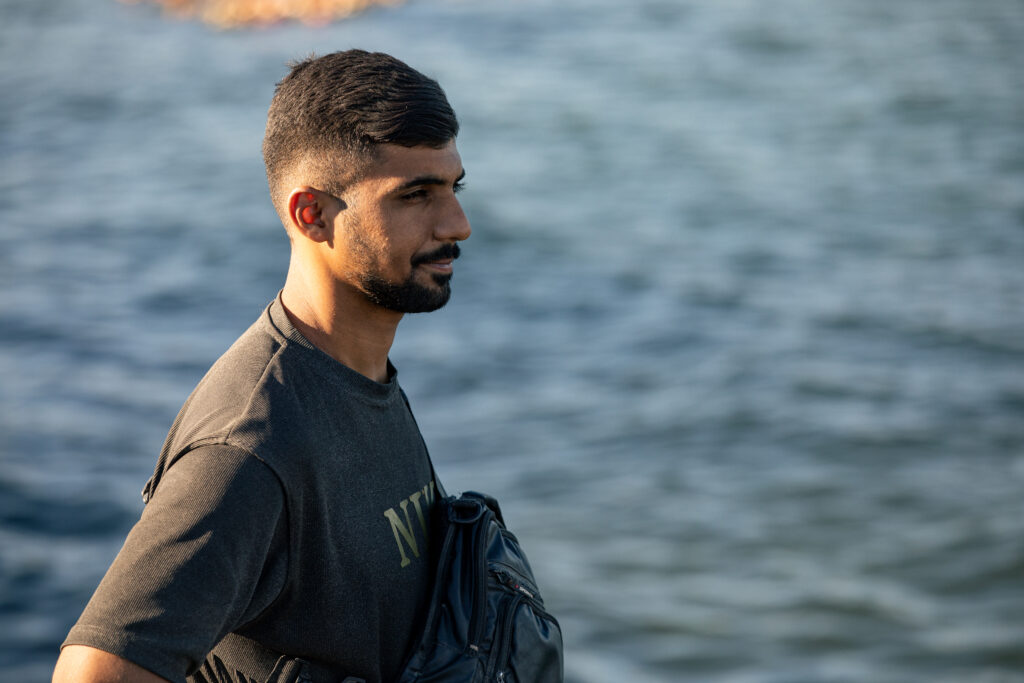
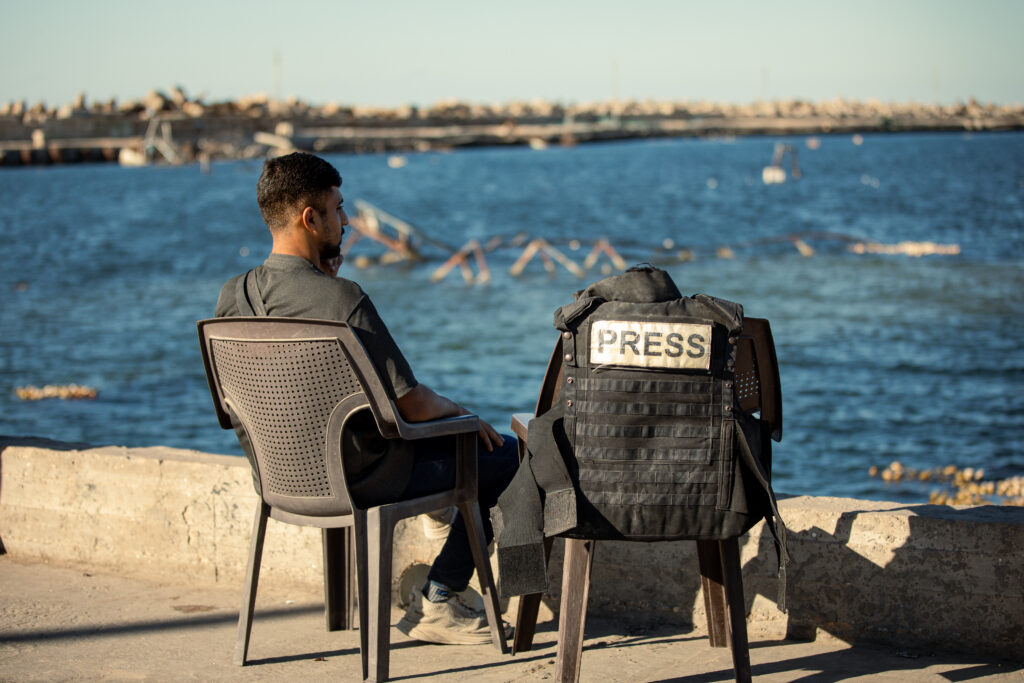
When asked where he finds peace, Nahed smiles faintly. “The only place I go to breathe is the sea,” he says. “For all of Gaza, the sea is our escape.”Even under bombardment, it remains a place of fragile calm. “We sit by the waves, with a cup of coffee, watching the horizon while the war rages around us,” he says. “It’s our small act of survival, a way to keep going.
What Inspired This Collaboration?
Fifteen years ago, Rebecca Cutter met Mohammad Alatar at an Israeli checkpoint after returning from the West Bank, where she was working at the time. It was dusk when the driver left her off at the Israel-Jordan border. She presented her U.S. passport, and after questioning, the Israeli soldiers refused her entry into Jordan. With no means of communication or transport, she was stranded. Mohammed entered the checkpoint, and once he was cleared, he intervened on her behalf, helping to negotiate her crossing. “I was forever grateful for that chance encounter.” During their drive to Amman, Mohammed shared his work as a Palestinian human rights activist and documentary filmmaker, and they formed a lasting friendship.
In conversations, over the summer of 2025, they discussed their feelings of impotence in the face of genocide. That conversation inspired this project.
Mohammad’s films, which include The Iron Wall (2006), Jerusalem: The East Side Story (2007), and Broken (2018), expose the harsh realities of occupied Palestine and the struggle for self-determination.
Follow Mohammad’s Inspirational Social Media
His beautifully written social media posts offer profound insights, reminding us that “this isn’t just about Gaza; it’s about our shared humanity and the collective responsibility to resist capitalism-driven brutality.”
Currently residing in the West Bank, Mohammad is working on a film about Israeli settlements.
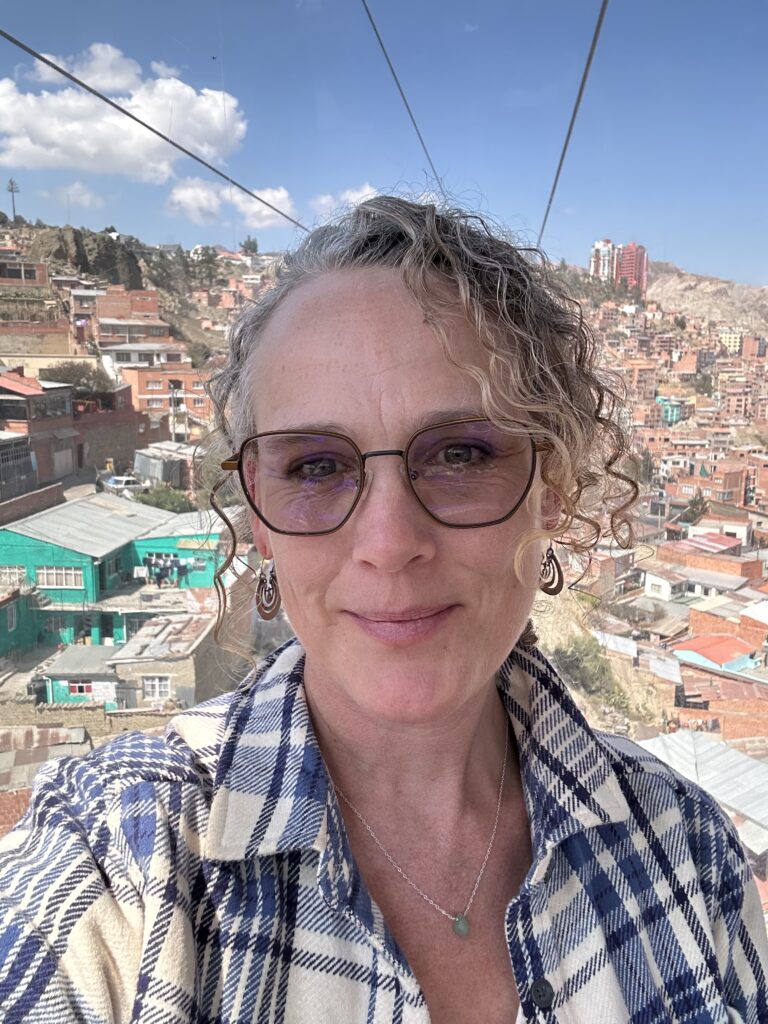
Rebecca Day Cutter, origionally from Northern New York State, U.S.A., has worked in solidarity with organizations in Latin America since 1997. She is a mother, a potter, an activist, a community organizer, and a facilitator. In her role as a cultural bridge, she supports access to education, food sovereignty, climate change adaptation, and women’s leadership. In 2000, she co-founded the Mesoamerican Permaculture Institute, on the shore of Lake Atitlan in Guatemala.
In 2009 and 2010, Rebecca worked in Palestine as a Popular Education Trainer and led an International Symposium on Popular Education in Egypt in 2011. Rebecca currently works with the Bolivian Quaker Education Fund and Garden’s Edge, and has enjoyed participating in the Seed Travels Movement, organizing knowledge exchanges with Non-Indigenous, Maya, and Haudenosaunee communities.